“Aaj Main Upar…. Aasman Niche…”
These lines from a famous song perfectly describe the situation when you are on a flight. At high altitude, you literally soar above the clouds and are surrounded by skies that have no limits. But doesn’t it often leave us wondering how high we are flying and how high do planes fly? Let’s hop on cheap flights and enjoy the thrill of this 35,000-ft adventure.
Here’s a step-by-step guide to understand the science behind planes flying at high altitude:
TABLE OF CONTENTS
- The Cruising Altitude
- Why Do Planes Fly at Higher Altitudes?
- Here’s a deeper look at the main reasons why planes fly high:
- Domestic Flight Height vs International Flight Height in Feet
- The Role of Cabin Pressure
- Different Planes, Different Heights
- Plane Flying in Height: Extremes and Records
- Why Not Fly Higher Than 40,000 Feet?
- The Future of Flying
- Final Thoughts
- FAQs- How High Do Planes Fly? The Truth Will Blow Your Mind
- Akbar Travels Services
The Cruising Altitude
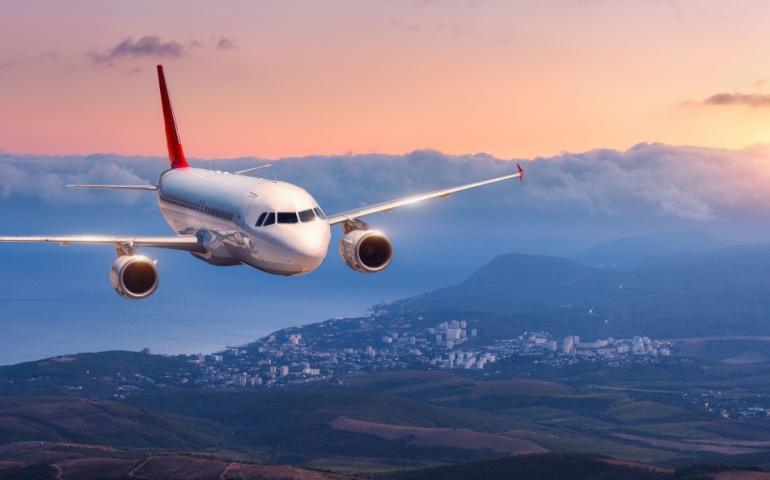
Image Credit: Denis Belitsky/Shutterstock
Most people are surprised to learn when they ask “how high do planes fly?” that airplanes don’t just cruise “a little above the clouds.” In fact, the standard cruising altitude for commercial jets is around 35,000 feet. That’s nearly seven miles above sea level, and even a mile higher than Mount Everest.
So, the next time you’re sipping tea or coffee in mid-air, remember – you’re comfortably sitting 35, 000 ft above in a zone where humans could never survive without technology.
Why Do Planes Fly at Higher Altitudes?
Airlines don’t just randomly decide to cruise at 35,000 feet. When it comes to how high do planes fly, every mile up in the sky has a purpose – balancing safety, efficiency, and passenger comfort. No matter the distance, go for online hotel booking with all-inclusive holiday packages ensure your journey is stress-free from take-off to check-in.
Here’s a deeper look at the main reasons why planes fly high:
1. Fuel Efficiency
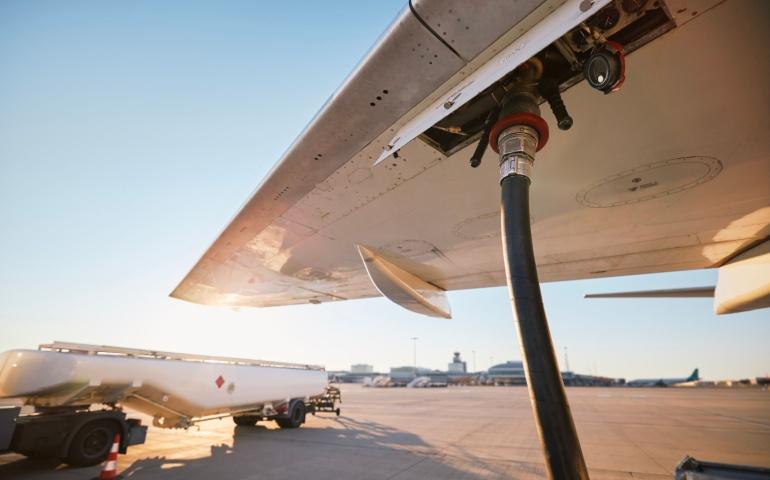
Image Credit: Jaromir Chalabala/Shutterstock
At sea level, the air is dense and creates strong resistance against the wings and body of the plane. By climbing higher, where the air is thinner, the plane experiences less drag.
- Less drag = less fuel burned = lower operating costs.
- This is why most long-haul flights aim for 35,000–40,000 feet – it saves airlines millions of dollars in fuel every year.
Here’s an interesting fact: For passengers, it also means more affordable ticket prices since airlines cut costs.
Discover: Experts Rank the Safest Mode of Transport in 2025! #1 Will Surprise You
2. Avoiding Weather
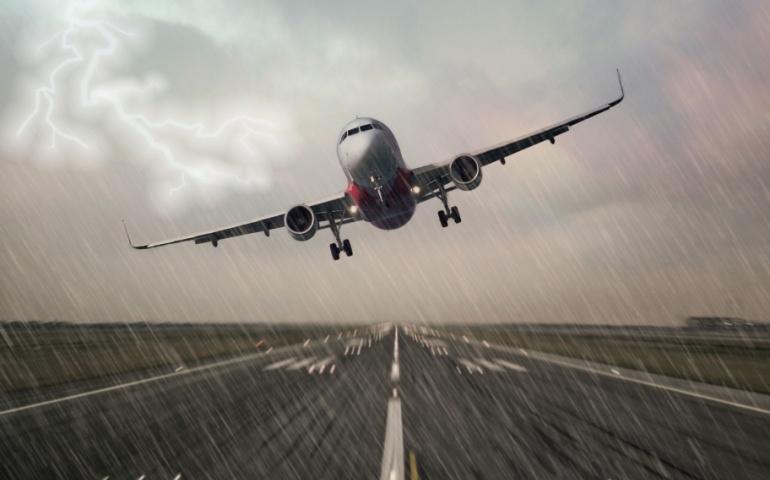
Image Credit: Hananeko_Studio/Shutterstock
Most severe weather, such as thunderstorms, lightning, heavy rain, and even clouds, occurs in the lower atmosphere (below 20,000 feet). By climbing above this zone, airplanes can bypass the worst of it.
- That’s why flights often feel calmer once cruising altitude is reached.
- However, not all bumps disappear – planes still encounter turbulence caused by jet streams (fast winds in the upper atmosphere) or mountain ranges.
So, if you’ve ever wondered how high do planes fly to avoid rough weather, the answer is simple – flying higher makes the journey far more stable than staying low.
3. Safety Buffer
Flying high gives pilots a safety net. At 35,000 feet, if something goes wrong – say an engine failure – the plane has enough altitude to glide for a considerable distance.
For example:
- A Boeing 747 can glide about 100 miles from that altitude without engine power.
- This extra space buys pilots time to act calmly rather than rushing to land.
In simple words, think of it as being on top of a hill with a bicycle, where you can still roll for miles even if you stop pedaling.
Planning a trip overseas? Get your hands on online visa services for 180+ countries for a smooth journey.
4. Air Traffic Control
The skies are like invisible highways, and planes need order to avoid chaos. This is where altitude layers come in.
- Aircraft flying eastbound may use one set of altitudes (say 34,000 or 36,000 feet), while westbound flights use another (33,000 or 35,000 feet).
- At busy airports, this structured layering allows hundreds of flights to take off, cross, and land safely every hour.
So, when you think about how high do planes fly, remember it’s not just about reaching the sky – it’s about creating enough “lanes in the sky” to manage global air traffic.
Also Read: How Far Can You Fly? Longest and Shortest Flights in the World
Domestic Flight Height vs International Flight Height in Feet
Not every journey takes you to the same altitude. Here’s the breakdown:
- A domestic Flight Height: Usually between 25,000 and 33,000 feet.
- The International Flight Height: Around 35,000 to 40,000 feet.
If you are still wondering how high do planes fly, the answer depends on the journey.
The Role of Cabin Pressure
Here’s the shocking truth: At 35,000 feet, the air outside is so thin you wouldn’t survive more than a few seconds. That’s why airplanes have a system of cabin pressure.
Different Planes, Different Heights
The answer to how high do planes fly isn’t the same for all aircraft. Each type has its own “sweet spot” in the sky:
- Commercial flights: Up to 30,000–40,000 feet.
- Private Jets: Up to 45,000 feet to avoid traffic.
- Military Jets: Beyond 60,000 feet.
- Small Propeller Aircraft: Between 10,000 and 15,000 feet
So, when we ask how high do planes fly, the answer depends a lot on the kind of plane.
Plane Flying in Height: Extremes and Records
Let’s look at record-breakers:
- The SR-71 Blackbird: Once cruised at 85,000 feet, nearly brushing the edge of space.
- Weather Balloons and Experimental Aircraft: Above 100,000 feet.
Why Not Fly Higher Than 40,000 Feet?
If higher means smoother and more efficient, why don’t airlines simply go beyond 40,000 feet?
The answer is simple; it’s physics. Above that, wings can’t generate enough lift, and engines struggle for oxygen.
The Future of Flying
Image Credit: Denis Belitsky/Shutterstock
Supersonic and hypersonic jets under development may fly at 60,000 feet, slashing travel times across continents. Just imagine a Delhi-to-London flight in under three hours! While it is still experimental, the sky, literally, is the limit.
Final Thoughts
So, how high do planes fly? The simple answer is: usually around 35,000 feet. It’s the magic number that balances fuel savings, safety, and passenger comfort.
Whether you’re traveling for work, vacation, or adventure, remember this: the next time you hum “Aaj main upar, aasman neeche,” you really are – flying higher than mountains, above the clouds, in a part of the sky where only airplanes can survive.
FAQs- How High Do Planes Fly? The Truth Will Blow Your Mind
How high do planes fly in km?
Most commercial planes cruise at 10–12 km above sea level (around 33,000–40,000 feet).
Can a plane fly over Mount Everest?
Yes, since Everest is 8.8 km (29,000 feet) tall and planes cruise higher at 10–12 km. But airlines usually avoid it due to turbulence, weather, and lack of nearby emergency airports.
Can planes fly at 50,000 feet?
Some military jets and private jets can reach 50,000 feet (15 km), but commercial airliners generally stay below 41,000–43,000 feet.
Why don’t planes fly at 60,000 feet?
The air is too thin for engines, it’s harder to maintain cabin pressure, and fuel efficiency drops. Only special aircraft like the Concorde or spy planes can go that high.
How fast do planes fly?
Commercial jets cruise at about 850–900 km/h (530–560 mph). Supersonic jets like Concorde went over 2,100 km/h, while military fighters can go faster.
How high do helicopters fly?
Most helicopters fly up to 3–4 km (10,000–12,000 feet). Some specialized ones can go higher, and the record is about 12 km (40,000 feet).
How high do planes fly on short flights?
On shorter domestic flights, planes usually stay between 5–9 km (16,000–30,000 feet) since the journey is too short to climb to full cruising altitude.
If You Like This, You May Love This:
Teacher’s Day Special: Destinations Where Teaching Pays You to Travel!
Ever Wonder Why Airplane Round Windows Exist?
World’s Tallest Ganesh Statue Is Not In India… But In This Country
Akbar Travels Services
Best Flight Deals
Mumbai to Delhi Flight Tickets | Mumbai to Bangalore Flight Tickets | Kolkata to Mumbai Flight Tickets | Kochi to Abu Dhabi Flight Tickets | Lucknow to Riyadh Flight Tickets | Delhi to Ahmedabad Flight Tickets
Domestic Flights
Pune to Bangalore Flights | Chennai to Delhi Flights | Bangalore to Chennai Flights | Mumbai to Delhi Flights | Bangalore to Hyderabad Flights | Ahmedabad to Goa Flights | Mumbai to Kolkata Flights | Hyderabad to Delhi Flights | Bangalore to Goa Flights | Mumbai to Goa Flights
International Flights
International Flights Booking | Delhi to Dubai Flights | Delhi to Bangkok Flights | Delhi to Toronto Flights | Mumbai to Dubai Flights | Delhi to Singapore Flights | Delhi to London Flights | Delhi to Kathmandu Flights | Mumbai to London Flights | Chennai to Singapore Flights | Mumbai to Singapore Flights | Delhi to New York Flights | Kolkata to Bangkok Flights
Best Hotel Deals
Hotels In Dubai | Hotels In Mumbai India | Hotels In Pune India | Hotels In Singapore | Hotels In Kochi India | Hotels In Munnar India | Hotels In Bangkok Thailand | Hotels In Kuala Lumpur Malaysia | Hotels In Mecca Saudi Arabia | Hotels In Mahabalipuram India
Apply Visa Online
Dubai Visa Online | 14 days Dubai Visa | 30 days Dubai Visa | 60 days Dubai Visa | Dubai Transit Visa | UAE Visa | Singapore Visa | Malaysia Visa | Thailand Visa | Sri Lanka Visa | US Visa | UK Visa | Schengen Visa | Canada Visa | Australia Visa | New Zealand Visa | France Visa | Italy Visa | Turkey Visa Online | Philippines Visa | Cambodia Visa Online | Vietnam Visa Online | Oman Visa
International Tour Packages
Dubai Tour Packages | Singapore Tour Packages | Thailand Tour Packages | Malaysia Tour Packages | Sri Lanka Tour Packages | US Tour Packages | United Kingdom Tour Packages | South Africa Tour Packages | Europe Tour Packages | Bali Tour Packages | Mauritius Tour Packages | Maldives Tour Packages | Cordelia Cruise Packages |
Domestic Tour Packages
India Tour Packages | Goa Tour Packages | Kerala Tour Packages | Leh Ladakh Tour Packages | Himachal Tour Packages | Andaman Tour Packages | Rajasthan Tour Packages | Uttarakhand Tour Packages | Jammu and Kashmir Tour Packages
Packages by Themes
Honeymoon Packages | Adventure Packages | Visa on Arrival Packages | Family Packages | Romantic Packages | Weekend Getaways Packages

Pingback: Hidden Airplane Features That Are Secret Saviours Along the Way
Pingback: Recent Aviation News You Shouldn't Miss for Smooth Air Travel
Pingback: Find Out Solo Travel Mistakes That Can Ruin a Trip…
Pingback: How to Track Flight Prices Like a Pro (Without Losing Your Sanity)