


Vietnam Visa Rules and Regulations for Indians
Vietnam is welcoming, warm, and fairly simple when it comes to entry rules, but it still follows a clear immigration system. Vietnam Visa Rules and Regulations are not difficult, yet they leave very little room for casual errors. A small mismatch in the Vietnam visa dates or an overlooked condition can turn a smooth arrival into an uncomfortable airport conversation. This guide explains how the rules actually work, based on what is seen at counters and immigration desks, not just on paper.
Vietnam Visa Rules and Regulations apply to every traveller entering the country, whether the visit is for tourism, business, or a short stopover. Understanding these rules early saves time, stress, and unnecessary expense later.
Overview of Vietnam Visa Rules
Vietnam Visa Rules and Regulations are designed to control how long visitors stay, what activities they can do, and how they enter and exit the country. The rules change occasionally, but the basics stay steady.
A valid Vietnam Visa must match the purpose of travel. A tourist entry cannot be used for meetings or paid work. A business entry allows meetings but not employment. Immigration officers do check this, especially in larger airports.
Vietnam Visa Rules and Regulations also define how many times entry is allowed, how long the stay can be, and whether extensions are permitted. These points matter more than people expect.
Vietnam Entry and Exit Regulations
Vietnam entry rules begin at the airport counter. Immigration officers verify the passport, visa type, stay duration, and return or onward travel details. Passports must be valid for at least six months from the date of entry, with at least two blank pages.
One practical thing to remember. Entry dates start counting from the day of arrival, not the day after. Many travellers miscalculate their exit date by one day and face fines.
Exit regulations are equally strict. Leaving Vietnam even one day late triggers overstay penalties. Immigration systems record every entry and exit, so errors do not go unnoticed.
For smoother arrivals, many travellers plan their travel with cheap flights to Vietnam that align exactly with their visa validity. Flight timing matters more than expected.
Vietnam Visa Rules and Regulations also require travellers to complete the online Vietnam Digital Arrival card before arrival. This form links entry data with immigration systems and speeds up processing at airports.
Rules Related to Visa Duration and Stay Limits
Visa duration is fixed at the time of approval. Vietnam Visa Rules and Regulations do not allow staying beyond the approved period, even for emergencies, unless an official extension is granted.
Tourist visas usually allow stays of thirty or ninety days, depending on the approval. Business visas can allow longer periods, but the stay limit must still be respected.
Multiple entry visas permit re-entry during validity, but each stay must still stay within allowed days. A common misunderstanding is assuming unlimited stay during validity. That is not how the system works.
Here is what really happens at the counter. Officers often ask the intended exit date verbally and compare it with the visa expiry. Any mismatch raises questions.
Visa Extension and Overstay Rules
Visa extensions are possible but not guaranteed. Vietnam Visa Rules and Regulations allow extensions only under certain conditions, and approvals depend on visa type and travel history.
Overstays attract daily fines. Short overstays usually lead to fines and warnings. Longer overstays can result in blacklisting or entry bans.
Extensions should be applied for before expiry. Waiting until the last day increases the risk of rejection. It’s easiest to apply through Akbar Travels, they handle the whole process smoothly. Many travellers rely on akbartravels.com for extensions because they understand timing and paperwork well.
Common Mistakes That Lead to Visa Issues
Most problems come from small oversights rather than major violations. Vietnam Visa Rules and Regulations are clear, but they expect travellers to follow them carefully.
Some frequent mistakes include
Entering on the wrong visa category.
Misreading entry and exit dates.
Submitting unclear passport scans or photos.
Assuming visa free entry without confirmation.
Ignoring re entry conditions on single entry visas.
Actually, photo quality causes more delays than expected. Background shade, glare, or cropped edges often lead to application holds.
When booking travel plans, travellers often bundle Vietnam tour packages with visa services through trusted platforms like akbartravels.com, which reduces such errors.
Photo Requirements Under Vietnam Visa Rules
Photo rules are simple but strict. Vietnam Visa Rules and Regulations require recent passport size photos with a plain background, no shadows, and neutral expressions.
Photos must match passport details closely. Old photos or selfies often cause delays. Head coverings are allowed only for religious reasons, and facial features must remain fully visible.
Processing Time Rules
Processing time depends on visa type. Standard approvals usually take three to five working days. Express services shorten this, but only when documents are perfect.
Vietnam Visa Rules and Regulations allow immigration to pause processing without explanation if documents look inconsistent. Planning early avoids rushed submissions.
Travellers planning business schedules often secure visas first, then book best hotels in Vietnam and internal travel. This sequence avoids costly date changes.
Validity Rules Explained Simply
Visa validity defines the window for entry. Stay duration defines how long one can remain inside Vietnam. These are not the same.
Vietnam Visa Rules and Regulations treat early entry and late exit as violations, even if only by hours. Midnight cutoffs apply strictly.
Practical Travel Alignment Tips
Align visa dates with travel plans carefully. Flights, accommodation, and internal transport should respect visa validity. A well planned Vietnam trip always begins with correct visa dates.
Vietnam Visa Rules and Regulations also limit activities. Paid work, internships, and long term stays require different permits beyond standard visas.
For travellers unsure about categories, akbartravels.com often helps identify the correct visa type before application, reducing rejection risk.
FAQs:
Q.Is a visa mandatory to enter Vietnam?
Yes. Most Indian travellers must hold a valid visa before arrival under Vietnam Visa Rules and Regulations.b
Q.Can entry be denied even with a valid visa?
Yes. Entry depends on meeting all conditions at immigration.
Q.Is overstaying by one day serious?
Yes. Even one day leads to fines and records.
Q.Can visas be extended inside Vietnam?
Extensions are possible but depend on visa type and approval.
Q.Is visa validity different from stay duration?
Yes. Validity controls entry dates. Stay controls length inside Vietnam.
Q.Are multiple entries automatic?
Only if the visa explicitly allows it.
Q.Is the arrival card compulsory?
Yes. The online Vietnam Digital Arrival card is required.
Q.Can tourist visas be used for meetings?
No. Business activity requires proper permission.
Q.Do children follow the same rules?
Yes. Each traveller must comply individually.
Q.What is the safest way to apply?
Using experienced services like akbartravels.com helps avoid common errors and delays.
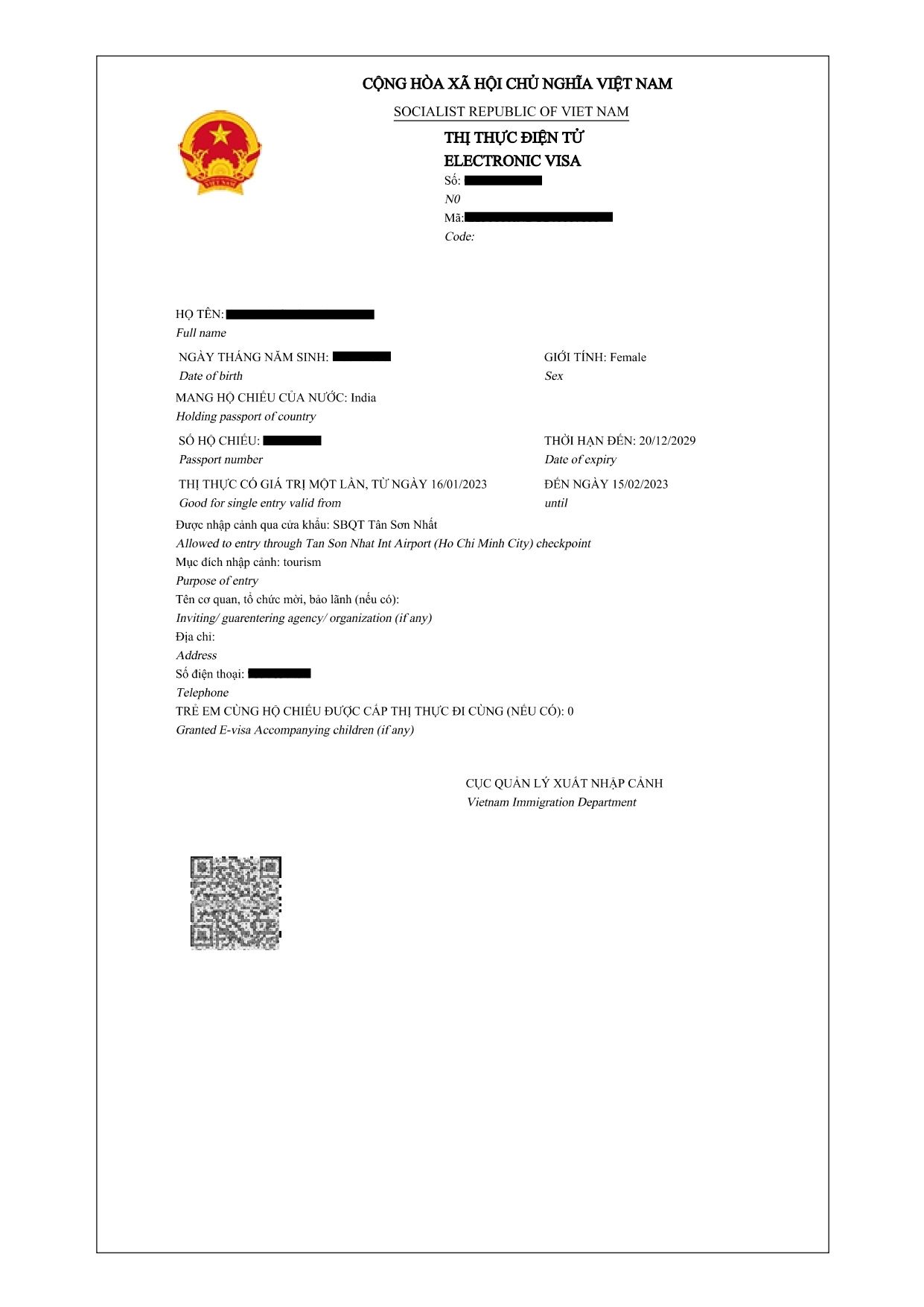
Vietnam Visa Sample
More About Vietnam Visa
- Vietnam Visa for Indians
- Types of Vietnam Visa
- Vietnam Tourist Visa
- Vietnam Business Visa
- Vietnam Visa Rejection Reasons
- Vietnam Visa Eligibility
- Vietnam Visa Photo Requirements
- Vietnam Visa Documents and Requirements
- Vietnam Visa Cost for Indians
- Vietnam Visa on arrival for Indians
- Vietnam Emergency Visa
- How to check Vietnam Visa status online
- Vietnam Transit Visa for Indians
- Vietnam Visa Approval Letter
- Emergency Vietnam Visa
- Vietnam Travel Guide
- International Flight
- Domestic Flight
- Hotels
- Visa
- Domestic Tour Packages
- International tour packages
- Cruise Lines
New Delhi to Dubai FlightsMumbai to Dubai FlightsDelhi to London FlightsDelhi to Bali FlightsDelhi to Kathmandu FlightsDelhi to Singapore FlightsMumbai to London FlightsChennai to Dubai FlightsMumbai to Hanoi FlightsMumbai to Bali Denpasar FlightsAhmedabad to Dubai FlightsDelhi to Hong Kong FlightsDubai to Mumbai FlightsMumbai to Singapore FlightsDelhi to Paris FlightsBangalore to Ho Chi Minh City FlightsChennai to Bangkok FlightsAmritsar to Dubai FlightsDelhi to Toronto FlightsDelhi to Tokyo FlightsBangalore to Bangkok FlightsMumbai to Abu Dhabi FlightsKochi to Dubai FlightsKozhikode to Dubai FlightsNew Delhi to Bangkok FlightsDelhi to Tehran FlightsChandigarh to Dubai FlightsBangalore to Dubai FlightsAhmedabad to London FlightsKannur to Dubai FlightsNew Delhi to Phuket FlightsMangalore to Dubai FlightsMumbai to Bangkok FlightsNew Delhi to Almaty FlightsKochi to Sharjah FlightsMumbai to Kualalumpur FlightsKochi to Abu Dhabi FlightsKolkata to Phuket FlightsMumbai to Hong Kong FlightsKuwait to Chennai FlightsAhmedabad to Toronto FlightsDelhi to Melbourne FlightsPune to Bangkok FlightsIndore to Dubai FlightsInternational Flights Booking
Delhi to Goa Flights Mumbai to Delhi Flights Delhi to Mumbai Flights Delhi to Bangalore Flights Bangalore to Delhi Flights Delhi to Chennai Flights Chennai to Delhi Flights Delhi to Hyderabad Flights Hyderabad to Delhi Flights Delhi to Kolkata Flights Kolkata to Delhi Flights Delhi to Pune Flights Pune to Delhi Flights Mumbai to Goa Flights Bangalore to Goa Flights Chennai to Goa Flights Hyderabad to Goa Flights Mumbai to Bangalore Flights Bangalore to Mumbai Flights Mumbai to Chennai Flights Chennai to Mumbai Flights Mumbai to Hyderabad Flights Hyderabad to Mumbai Flights Mumbai to Kolkata Flights Kolkata to Mumbai Flights Bangalore to Chennai Flights Chennai to Bangalore Flights Bangalore to Hyderabad Flights Hyderabad to Bangalore Flights Ahmedabad to Mumbai Flights Mumbai to Ahmedabad Flights Kochi to Bangalore Flights Bangalore to Kochi Flights Trivandrum to Bangalore Flights Bangalore to Trivandrum Flights Kochi to Mumbai Flights Mumbai to Kochi Flights Jaipur to Mumbai Flights Mumbai to Jaipur Flights Indore to Mumbai Flights Mumbai to Indore Flights Domestic Flights Booking
Best Hotels In Abu Dhabi Best Hotels In Agra Best Hotels In Ajmer Best Hotels In Alibaug Best Hotels In Alleppey Best Hotels In Alwar Best Hotels In Ambala Best Hotels In Amritsar Best Hotels In Anjuna Beach Best Hotels In Baga Beach Best Hotels In Bengaluru Best Hotels In Bikaner Best Hotels In Bilaspur Best Hotels In Candolim Beach Best Hotels In Chail Best Hotels In Chennai Best Hotels In Dubai Best Hotels In Fort Kochi Best Hotels In Gulmarg Best Hotels In Gurugram Best Hotels In Hampi Best Hotels In Havelock Best Hotels In Hyderabad Best Hotels In Jaipur Best Hotels In Kanyakumari Best Hotels In Kochi Best Hotels In Kodaikanal Best Hotels In Kovalam Best Hotels In Kullu Best Hotels In Leh Best Hotels In Lonavala Best Hotels In Lucknow Best Hotels In Mahabalipuram Best Hotels In Manali Best Hotels In Mangalore Best Hotels In Mount Abu Best Hotels In Munnar Best Hotels In Mysore Best Hotels In Nashik Best Hotels In New Delhi Best Hotels In Ooty Best Hotels In Pahalgam Best Hotels In Pondicherry Best Hotels In Pune Best Hotels In Secunderabad Best Hotels In Sharjah Best Hotels In Shimla Best Hotels In Sinquerim Beach Best Hotels In Thane Best Hotels In Thekkady Best Hotels In Tirupati Best Hotels In Trivandrum Best Hotels In Udaipur Best Hotels In Vagator Beach Best Hotels In Wayanad Best Hotels In Yercaud Best Hotels In Vishakapatanam
Dubai Visa Singapore Visa Malaysia Visa Malaysia Visa Sri Lanka Visa Schengen Visa US Visa UK Visa China Visa Australia Visa
Kashmir Holiday Package Leh Ladakh Packages Goa Holidays Andaman Holidays Kerala Tour Packages Himachal Packages
We Accept


Members Of


Certified by

Powered by

Follow us


Copyright © 2026 www.akbartravels.com All Rights Reserved.