Every time you hunt for the best flight deals online, there’s a moment of disbelief: the nonstop flight is painfully expensive, while a longer, connecting route costs far less. It feels backward, why should taking more flights be cheaper than taking one? The answer lies in how airlines price seats, balance demand, and compete across routes, not in chance or gimmicks. Flight pricing follows a precise logic designed to maximize revenue and fill planes efficiently, and once you see how that system works, cheap connections.
Whether you’re traveling on connecting flights or planning a proper layover, don’t forget to get your paperwork sorted through online visa services for 180+ countries.
TABLE OF CONTENTS
What Is A Connecting Flight?
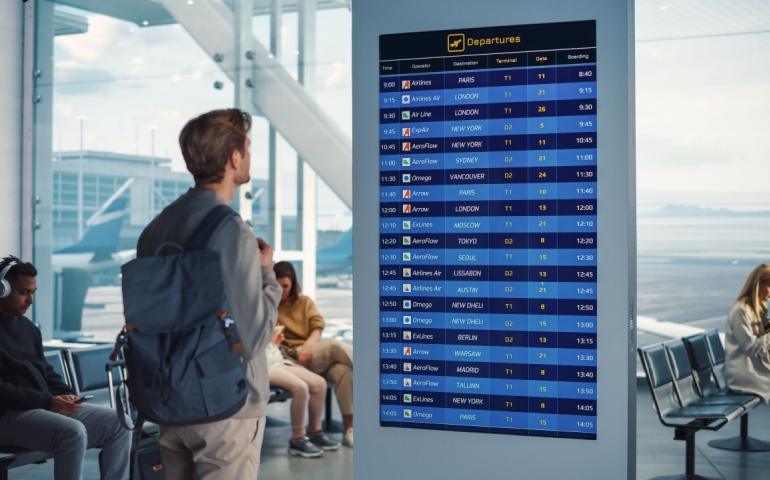
Image credit: Shutterstock/Gorodenkoff
At its simplest, a connecting flight means you’re getting to your final destination with at least one stop in between, stops that usually involve changing planes. So instead of cruising straight from A to B, you go A to stop to C. That stop might be quick, 90 minutes, or long enough to sample an airport’s questionable pizza.
In airline land, that’s classic hub and spoke routing. Major carriers funnel traffic through their hub airports so seats on each leg are fuller. That’s one of the first clues to the big question, why are connecting flights cheaper than direct? Let’s dive into the logic beneath the price tag.
Why Airlines Price Stops Lower (AKA Airline Economics 101)
1) Supply and Demand Wizardry
Airlines know nonstop flights are super popular because they get you there fast and with zero fuss, ideal for families, business travelers, and anyone who hates hauling luggage between gates. That convenience means big demand. And high demand means airlines can charge a premium.
Meanwhile, flights with stops are, are less appealing. Longer travel time, extra boarding, and possible security lines. Few travelers would choose them unless the price is tempting. So airlines sweeten the deal with lower fares.
2) Hub Systems and Route Economics
Many big airlines operate on a hub-and-spoke model. They dispatch flights from big hubs like Dubai, Doha, Singapore, stitching together legs to maximize aircraft use. A flight that’s half full direct won’t pay the bills, but a two-leg flight with lots of people hopping on and off at the hub can fill seats and feel profitable. That efficiency often translates into cheap connecting flights.
3) Competitive Pricing
On routes where multiple airlines service each leg individually, carriers slice prices to lure ticket buyers. Sometimes resulting in absurdly low fares compared to the premium nonstop. More airlines competing across multiple legs equals more options for travelers to snag affordable seats.
Also Read: Turn Your Layover into a Staycation at the World’s Best Airport Hotels
Facts vs Feelings: Real Advantages of Connecting Flights
Let’s talk benefits beyond the obvious cheap ticket price, stuff frequent flyers actually care about.
Cost Savings
Hands down, this is the main win. Connecting airfares are designed to be wallet-friendly, especially on long-haul routes where nonstop options are limited or dominated by expensive carriers. Studies show connecting itineraries often cost significantly less because airlines price them to attract price-sensitive travelers.
More Airlines and Schedule Flexibility
Direct flights might only have a few options daily. But if you open up the schedule to include scenic pause points in hubs, suddenly there are morning, afternoon, or evening departures from lots of carriers. That’s more choice and easier planning.
Break Up Long Travel
Flying nonstop over 14 to 17 plus hours, like from the U.S. to India, especially with kids or older travelers, can be brutal. A short layover means a real stretch, a meal that tastes better than airline veggie pasta, and mental refresh time. For many, that’s worth the extra hour.
Bonus Exploration
Some airlines and routes practically invite you to enjoy a mini adventure. Step out in Doha, sample street food in Dubai, or stroll gardens near Singapore Changi if you’ve got a long enough transit flight window. It’s travel with a story, not just transport.
Better Seat Availability
Since nonstop premium seats often sell out fast, connecting flights tend to have more options, even in higher classes, without hemorrhaging your budget.
So… are There Drawbacks?
Totally, it’s not all magic carpet rides. Connecting flights take longer overall, risk missed connections if timing’s tight, and sometimes involve navigating two terminals with baggage in tow.
But compared to the price savings and options, most travelers who don’t have strict schedules see it as worthwhile, especially with a bit of planning.
Also Read: The New Longest Flight in the World: Can You Stay in Air for Around 1 Day?
Smart Tips Before Booking
Learn how to book connecting flights smartly.
- Choose single ticket itineraries on same airline alliances when possible to simplify baggage flow and rebooking if needed.
- Schedule layovers with enough buffer. Rushing through terminals is nobody’s idea of fun.
- Always check any transit visa requirements at layover airports to avoid surprises.
If you’re planning to step out of the airport during a layover, book your stay with the best deals on hotel bookings online. Sometimes, an overnight layover can add a surprisingly affordable mini-vacation feel. And if your layover is longer than 24 hours, consider planning a city exploration with all-inclusive tour packages at your destination.
Final Boarding Call
So yes, connecting flights aren’t just the slower option. They’re a smart play for anyone who’s not in a rush and wants to keep cash for exploring once they land. Airlines price them lower because convenience is a premium, and travelers willing to trade a bit of time for savings can come out miles ahead, quite literally.
There’s the logic, the price incentives, and the real perks. Next time you see two itineraries side by side, give that budget-friendly connection a real look. It might mean more travel, less stress over the ticket bill, and a couple of extra stories to tell at the next coffee chat.
FAQs – Connecting Flights
What is a connecting flight?
It is a journey where you switch planes at an intermediate airport (a “layover”) rather than flying directly to your final destination.
What is the procedure for connecting flights?
After landing, follow signs for “Transfers” or “Connections” to find your next gate; you might need to clear security again, but usually not immigration if staying airside.
What is the difference between transit and connecting flight?
“Transit” usually refers to staying on the same plane during a brief stop, while a “connecting flight” always involves physically switching to a different aircraft.
Why are flight layovers cheaper?
Airlines often lower prices for multi-stop routes to compete with direct flights and to fill seats through their main “hub” airports.
Do I need to check in again for a connecting flight?
If it’s a single booking, you usually get all your boarding passes at the start and don’t need to check in again; if booked as separate tickets, you’ll have to check in for each leg.
Is a transit visa required for connecting flights?
It depends on your nationality and the country you’re stopping in; most places don’t require one if you stay in the airport, but some (like the US) require it even for quick stops.
Is immigration required for connecting flights?
Usually no if you’re staying in the international transit area, but you will need it if you’re switching from an international to a domestic flight or if you booked separate tickets.
Do we need to collect baggage for connecting flights?
On a single ticket, your bags are usually “checked through” to the end; however, you must collect them if you have separate tickets or if you’re entering a country (like the US) for the first time.
In case of connecting flights, what happens to luggage?
If it’s one booking, the airline moves it between planes for you. If it’s separate bookings, you must pick it up at the carousel and re-check it yourself.
What happens if you miss a connecting flight due to a delay?
If you booked a single ticket, the airline must rebook you for free; if they were separate tickets, you’re unfortunately on your own to buy a new one.
How much time should I allow between connecting flights?
Aim for at least 1 hour for domestic and 2-3 hours for international connections to handle possible delays or terminal changes.
What is the shortest layover you should take?
While some airports allow 30-45 minutes, it’s risky; sticking to a minimum of 60-90 minutes gives you a much better safety net for domestic hops.
Enjoyed This? Check Out These Next:
Do You Have to Recheck Baggage for Every Connecting Flight?
Direct vs Connecting Flights: Should You Choose to Save Time or Money?
You Could Get Kicked Off for Violating These Unspoken Flight Etiquette
Akbar Travels Services
Best Flight Deals
Mumbai to Delhi Flight Tickets | Mumbai to Bangalore Flight Tickets | Kolkata to Mumbai Flight Tickets | Kochi to Abu Dhabi Flight Tickets | Lucknow to Riyadh Flight Tickets | Delhi to Ahmedabad Flight Tickets
Domestic Flights
Pune to Bangalore Flights | Chennai to Delhi Flights | Bangalore to Chennai Flights | Mumbai to Delhi Flights | Bangalore to Hyderabad Flights | Ahmedabad to Goa Flights | Mumbai to Kolkata Flights | Hyderabad to Delhi Flights | Bangalore to Goa Flights | Mumbai to Goa Flights
International Flights
International Flights Booking | Delhi to Dubai Flights | Delhi to Bangkok Flights | Delhi to Toronto Flights | Mumbai to Dubai Flights | Delhi to Singapore Flights | Delhi to London Flights | Delhi to Kathmandu Flights | Mumbai to London Flights | Chennai to Singapore Flights | Mumbai to Singapore Flights | Delhi to New York Flights | Kolkata to Bangkok Flights
Best Hotel Deals
Hotels In Dubai | Hotels In Mumbai India | Hotels In Pune India | Hotels In Singapore | Hotels In Kochi India | Hotels In Munnar India | Hotels In Bangkok Thailand | Hotels In Kuala Lumpur Malaysia | Hotels In Mecca Saudi Arabia | Hotels In Mahabalipuram India
Apply Visa Online
Dubai Visa Online | 14 days Dubai Visa | 30 days Dubai Visa | 60 days Dubai Visa | Dubai Transit Visa | UAE Visa | Singapore Visa | Malaysia Visa | Thailand Visa | Sri Lanka Visa | US Visa | UK Visa | Schengen Visa | Canada Visa | Australia Visa | New Zealand Visa | France Visa | Italy Visa | Turkey Visa Online | Philippines Visa | Cambodia Visa Online | Vietnam Visa Online | Oman Visa
International Tour Packages
Dubai Tour Packages | Singapore Tour Packages | Thailand Tour Packages | Malaysia Tour Packages | Sri Lanka Tour Packages | US Tour Packages | United Kingdom Tour Packages | South Africa Tour Packages | Europe Tour Packages | Bali Tour Packages | Mauritius Tour Packages | Maldives Tour Packages | Cordelia Cruise Packages
Domestic Tour Packages
India Tour Packages | Goa Tour Packages | Kerala Tour Packages | Leh Ladakh Tour Packages | Himachal Tour Packages | Andaman Tour Packages | Rajasthan Tour Packages | Uttarakhand Tour Packages | Jammu and Kashmir Tour Packages
Packages by Themes
Honeymoon Packages | Adventure Packages | Visa on Arrival Packages | Family Packages | Romantic Packages | Weekend Getaways Packages

Pingback: Get Paid for Waiting: Flight Delay Compensation Explained
Pingback: International Flight Rules: Read These Before Zipping the Bag